
Entrepreneurship Lessons from Building a Freight Company

By Michael Ricklefs, King of Freight Entrepreneurship in logistics is built on solving real-world problems every day. Unlike industries where growth can rely heavily on innovation alone, freight operations demand consistency, adaptability, and disciplined execution. Building a freight company requires balancing customer expectations, operational efficiency, and market uncertainty. Many entrepreneurs enter the industry focused on expansion, but lasting success comes from creating systems and relationships that support sustainable growth. At King of Freight, the entrepreneurial journey has always centered on building dependable operations capable of performing under pressure while continuing to evolve alongside the industry. Understanding the Importance of Operational Discipline Early growth can mask operational weaknesses. When shipment volumes are low, informal processes may seem effective, but as demand increases, inconsistency quickly creates service challenges. Freight operations depend on clear workflows, accurate communication, and defined responsibilities. Successful entrepreneurs recognize that discipline is not restrictive, it creates scalability. Establishing structured procedures early allows teams to manage higher volumes without sacrificing reliability. Operational discipline turns daily activity into predictable performance, helping companies maintain customer confidence as they grow. Building Relationships That Support Growth Logistics is fundamentally a relationship-driven business. Strong partnerships with carriers, clients, and internal teams create the stability needed for long-term success. Trust develops through reliability and transparency rather than short-term transactions. Michael Ricklefs has observed that companies grow more sustainably when relationships are treated as strategic investments. Reliable carrier partnerships ensure capacity during tight markets, while collaborative client relationships encourage long-term planning instead of reactive decision-making. These connections become especially valuable during periods of disruption. Learning to Adapt to Industry Changes The freight industry evolves constantly due to economic cycles, regulatory updates, and changing customer expectations. Entrepreneurs must remain flexible and willing to refine strategies as conditions shift. Adaptability allows organizations to respond proactively rather than react defensively. Companies that monitor trends and adjust operations accordingly are better positioned to navigate uncertainty and maintain competitive advantages in a rapidly changing environment. Investing in Technology with Purpose Technology plays an essential role in modern logistics entrepreneurship, but successful adoption requires clarity of purpose. Tools that improve shipment visibility, reporting, and communication help teams manage complexity as operations expand. At King of Freight, technology investments focus on simplifying workflows and improving transparency rather than adding unnecessary layers of automation. The goal is to support better decision-making while strengthening coordination between teams, carriers, and clients. Leading Through Challenges Challenges are inevitable when building a freight company. Market downturns, delays, and operational disruptions of test leadership and organizational resilience. How leaders respond during difficult moments shapes company culture and long-term performance. Entrepreneurs who prioritize accountability, clear communication, and problem-solving create teams that remain focused even under pressure. Viewing challenges as learning opportunities helps organizations strengthen processes and improve future outcomes. Applying Entrepreneurial Lessons to the Future As logistics continues to evolve, entrepreneurial leadership will remain essential to driving efficiency and innovation. Companies that combine disciplined operations with adaptable thinking are better prepared for sustained growth. At King of Freight, ongoing improvements and strong partnerships continue to guide how we support clients in an increasingly complex supply chain environment. Ultimately, entrepreneurship in freight is defined by persistence and responsibility. Long-term success comes from building organizations capable of delivering consistent results while adapting to change, creating lasting value for clients, partners, and the industry.
Founder’s Role in Building Scalable Freight Operations

By Michael Ricklefs, King of Freight Building a freight operation that can scale successfully requires more than growth ambitions. It requires a clear vision supported by disciplined execution. In my years in logistics, I’ve learned that the early decisions founders make often determine whether a company can adapt as shipment volumes increase, and customer expectations evolve. Freight operations become increasingly complex as businesses grow, and without strong foundational systems, expansion can quickly create inefficiencies instead of progress. At King of Freight, scalability has always meant building processes and partnerships designed to support long-term stability rather than short-term expansion. Establishing Strong Operational Foundations Scalable logistics operations begin with structure. Founders must define workflows, communication standards, and service expectations early to prevent confusion as teams grow. Many freight companies struggle because initial processes are informal and difficult to replicate at larger volumes. In my experience, successful operations treat procedures as repeatable systems rather than individual efforts. Clear operational frameworks allow teams to maintain consistency even as shipment counts increase, and new markets are added. Establishing these foundations early enables sustainable growth without sacrificing service reliability. Building the Right Carrier Network A scalable freight operation depends heavily on strong carrier relationships. Founders play a critical role in shaping how those partnerships are developed and maintained. Instead of focusing solely on capacity, long-term success comes from building networks based on reliability, compliance, and shared standards. Michael Ricklefs has emphasized throughout the company’s development that careful carrier vetting creates operational stability. By prioritizing quality partnerships, logistics providers reduce risk and maintain performance consistency as demand grows. A dependable carrier network allows businesses to expand confidently while preserving customer trust. Investing in Technology That Supports Growth Technology becomes essential as freight operations scale. Manual processes that work for smaller shipment volumes quickly become inefficient at larger levels. Founders must recognize when to invest in platforms that provide visibility, reporting, and centralized management. At King of Freight, technology supports real-time tracking, documentation management, and communication across teams and clients. However, scalable operations require thoughtful implementation. Technology should simplify workflows and enhance decision-making rather than add unnecessary complexity. Creating a Culture of Accountability Operational growth places pressure on teams, making leadership culture increasingly important. Founders set the tone for accountability by establishing clear expectations and reinforcing responsibility across all roles. When employees understand how their performance impacts clients, operational standards remain consistent even during rapid expansion. Encouraging ownership and proactive problem-solving helps organizations maintain service quality as workloads increase. Strong leadership culture ensures growth strengthens operations rather than overwhelming them. Preparing for Market Changes and Disruptions Scalable freight operations must remain adaptable. Market fluctuations, capacity shifts, and external disruptions are inevitable in logistics. Founders who prioritize flexibility through diversified carrier networks and multi-modal capabilities create organizations capable of adjusting quickly when conditions change. Preparation allows companies to maintain service continuity while competitors struggle to respond. Adaptability becomes a key advantage as operations expand into new regions or industries. Building for Long-Term Success As the logistics industry evolves, scalable operations will depend on leadership that balances innovation with operational discipline. Founders who invest in systems, partnerships, and people create organizations prepared for sustained growth. At King of Freight, we continue refining processes that support expansion while maintaining reliability for clients. Ultimately, scalability in freight is not defined by how fast a company grows, but by how consistently it performs during growth. When strong leadership principles guide expansion, freight operations develop the resilience needed for long-term success.
Challenges in the US Freight Industry and How Companies Are Adapting

By Michael Ricklefs, King of Freight The freight industry has always operated on a cycle of change, but in recent years, the pace of disruption has accelerated significantly. In the past few years in logistics, I’ve seen how shifting market conditions, economic pressures, and evolving customer expectations continuously reshape how freight moves across the country. Companies that succeed are not necessarily the largest or the fastest, they are the ones prepared to adapt. When logistics providers fail to adjust to industry challenges, shippers experience delays, rising costs, and operational uncertainty. At King of Freight, adaptability has become a core principle guiding how we support clients through an increasingly complex freight environment. Navigating Market Volatility and Capacity Shifts One of the biggest challenges facing the U.S. freight industry is market volatility. Freight demand and carrier capacity rarely remain balanced for long. Economic fluctuations, seasonal demand, and fuel price changes can quickly alter transportation costs and equipment availability. What many businesses discover too late is that relying on a single carrier or rigid shipping strategy creates vulnerability. Logistics providers help stabilize operations by maintaining flexible carrier networks and monitoring market trends closely, allowing shipments to continue moving even when capacity tightens. Managing Rising Operational Costs Transportation costs have become a major concern for businesses across industries. Fuel prices, insurance requirements, labor shortages, and equipment expenses continue to influence freight rates. Companies must balance cost control with maintaining reliable service levels. In my experience, successful adaptation comes from smarter planning rather than simply choosing the lowest rate. Michael Ricklefs has observed that businesses benefit most when logistics strategies align service levels with shipment priorities, using consolidation, optimized routing, and mode selection to reduce unnecessary expenses while protecting delivery performance. Addressing Supply Chain Disruptions Weather events, port congestion, and unexpected global events have exposed vulnerabilities within supply chains. Disruptions that once affected isolated regions now create ripple effects nationwide. Logistics companies must anticipate these challenges and develop contingency plans before problems occur. Maintaining diversified carrier relationships and multi-modal capabilities allows providers to adjust quickly when routes change or delays arise. Preparation ensures that shipments remain on schedule even when traditional transportation plans are no longer viable. The Role of Technology in Industry Adaptation Technology continues to reshape how freight is managed. Real-time tracking, digital documentation, and data analytics provide businesses with greater visibility into shipment performance. These tools allow logistics teams to identify risks earlier and respond faster. However, technology alone does not eliminate challenges. Dedicated logistics professionals interpret data, communicate with carriers, and implement solutions when conditions shift. Combining digital visibility with experienced decision-making helps companies adapt more effectively to changing industry conditions. Responding to Changing Customer Expectations Customers today expect faster delivery timelines and consistent communication. Businesses must meet these expectations while managing cost pressures and operational complexity. Logistics providers play a key role by offering transparency and proactive updates that help companies plan confidently. At King of Freight, communication and responsiveness remain central to maintaining strong partnerships. Clear updates and collaborative planning help clients navigate uncertainty without sacrificing service reliability. Adapting for the Future of Freight The freight industry will continue evolving as economic conditions, technology, and customer needs change. Companies that invest in flexibility, strong partnerships, and operational visibility will be better positioned to manage future challenges. At King of Freight, we remain focused on building adaptable systems and resilient networks that help clients succeed regardless of market conditions. Ultimately, adaptation in logistics is not about reacting to change, it is about preparing for it. Organizations that embrace flexibility and continuous improvement create supply chains capable of performing reliably in any environment.
Leadership & Operations Management in Logistics

By Michael Ricklefs, Founder of King of Freight In freight and logistics, success depends on more than moving shipments—it’s driven by strong leadership and disciplined operations. Over the past seventeen years, building King of Freight from a single laptop on the floor of my apartment with no financial backing into one of the nation’s top freight brokerages has shown me that reliability, innovation, and people-first values are what truly set companies apart. Leadership That Builds Trust Effective leadership in logistics means accountability, adaptability, and empathy. At King of Freight, our culture is rooted in honesty, integrity, and respect. We embrace innovation to give clients real-time visibility and control, while never losing sight of the human element. From investing early in technology to championing inclusive hiring, we believe leadership is about recognizing potential and delivering consistent value. Operations: Where Excellence Happens Operational excellence is the engine behind strong client relationships. Our approach focuses on real-time monitoring, clear communication, and customized solutions tailored to each client’s needs. We maintain a carefully vetted carrier network and integrate technology without sacrificing personal accountability—every client has a direct point of contact, not a call queue. Leadership and Operations Working Together The most successful logistics companies align strategic vision with daily execution. By empowering teams to make real-time decisions and focusing on metrics that truly matter—on-time delivery, client satisfaction, and carrier performance—we ensure our operations consistently support our mission. Building Long-Term Partnerships In logistics, clients remember reliability more than price. Proactive problem-solving, transparent communication, flexibility, and continuous improvement have been central to our growth and reputation as a trusted partner. Looking Ahead As logistics continues to evolve through e-commerce, sustainability, and technology, the need for adaptable, values-driven leadership has never been greater. At King of Freight, our commitment remains the same: listen to clients, empower our people, and keep improving. Because success in logistics isn’t just about moving freight—it’s about moving businesses forward.
Downtown Wichita firm expands into three new states

King of Freight, the freight brokerage firm that always seems to be expanding, is doing it again. “We’ve kind of found a gold mine,” partner Mike Ricklefs said. He’s referring to Addison, Texas, the latest place the brokerage is expanding. Ricklefs has a house in Plano, and he said he noticed how many companies are in Addison, a city north of Dallas. “I saw the opportunity,” he said. “We’re hiring 50 people on the first of May. . . . We’re going to (hire) 50 people probably every 20 days until we can scale up to the thousands.” King of Freight doesn’t own trucks. It connects companies needing to move products with trucking firms and truckers who are able to move them. A couple of months ago, King of Freight expanded into Little Rock, Ark., too. With 30 employees, it’s not growing as quickly as Ricklefs predicts Addison will. “Little Rock has been kind of slow. It’s kind of a slow-growing culture.” A new office in Tampa, Fla., with 25 employees is doing a bit better, he said. “We’re brand new in Tampa. We’re trying to grow that as much as possible, too.” Ricklefs said one of his top brokers moved there, and ten of his best have moved to Texas. At the Wichita headquarters at the former Gander Mountain building at WaterWalk, King of Freight has 600 employees. Ricklefs said sales are up by 20% month over month compared to last year, and he anticipates adding more employees here as well, including at a future east-side office. “We’re building a monster office just for brokers,” Ricklefs said of plans on the east side. “I’ve already paid to have drawings.” The land is across Greenwich from Topgolf. “If you walk out of Topgolf’s front door, it’s right across the street,” Ricklefs said. He said he plans a 25,000-square-foot building, which compares to 90,000 square feet he has downtown. “I’ve had it in the works, and I’m just waiting because we haven’t maxed out the Gander Mountain building yet, but we will by probably early next year.” Ricklefs said he plans to keep the downtown building, which the company owns. “My headquarters is always going to be in Wichita, Kansas.”
Downtown Wichita firm to hire 200 to 300 more workers in the next six months
A number of things have been prompting King of Freight partners Mike Ricklefs and Greg Bolain to want to expand their downtown Wichita freight brokerage, then news broke last week that Minnesota-based C.H. Robinson Worldwide had substantial layoffs. “Our biggest competition is laying off (650 workers), so we feel like now is the right time to strike,” Ricklefs said. “That’s just more motivation.” King of Freight has 560 employees, 274 of whom are brokers, and Ricklefs said he and Bolain are going to hire another 200 to 300 people “probably within the next six months.” Another part of the expansion is how much sales have grown following the first year of the pandemic. In 2020, the company had 3% growth. Last year, that number jumped to 62%. “We had a surge when supply and demand just went crazy,” said CFO Whitney McFall. So far this year, she said the company has experienced a 36% growth in sales. Ricklefs said brokers are making an average of $260,000 a year, “which is incredible.” “Our brokers are just making a killing right now.” Of those who are also managers, he said several are making more than $1 million annually. As sales have increased, McFall said support staff have gotten raises, too. Ricklefs won’t disclose gross or net sales figures. McFall said the company is moving 5,000 truckloads a week. King of Freight doesn’t own trucks. It connects companies needing to move products with trucking firms and truckers who are able to move it. Ricklefs said he’s spent the last year developing load matching software that will allow drivers to drop off loads and pick up more in the same areas. “Basically we’re going to auto offer them reloads,” he said. For instance, a driver can drop off a load in Houston, and the software will search for possible reloads specifically in that area. Ricklefs said the idea is that the driver “just works with King of Freight and nobody else.” In years past, Ricklefs has made predictions about hiring more workers, but that hasn’t always happened. “We found out we do a lot better business and more business with the higher quality employees than the mass quantity.” He said the difference now is the amount of growth the company has had, the new software and the layoffs elsewhere in the industry. “We’re getting a ton of referrals right now,” Ricklefs said. Almost 400 employees are working out of the former Gander Mountain space at WaterWalk, and the rest work from home. At one point during the pandemic, Ricklefs thought he’d sell the building. He said he’s glad he kept it, but now he’s thinking he’ll eventually have to move out of it for larger space or have a second office. He said he’s added a pool table, foosball and ping pong to the office along with biweekly cookouts. “We’re doing a lot to boost morale. We’re having fun.”
A pandemic boost in business means this downtown space is no longer for sale
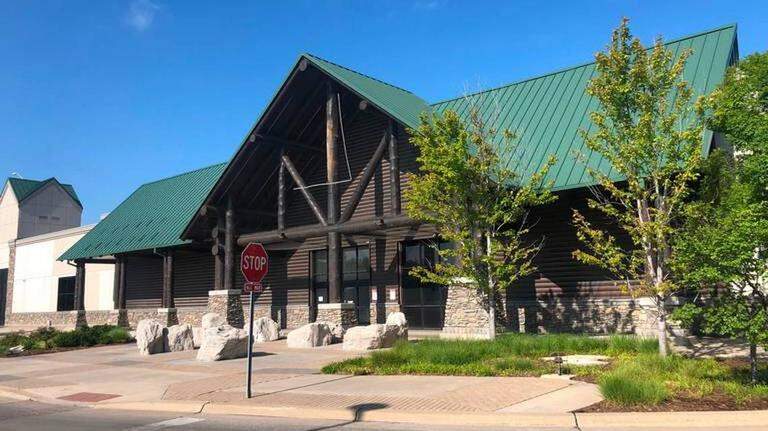
When last we checked in with King of Freight, owner Mike Ricklefs had put his WaterWalk office — the former Gander Mountain space — on the market for $6 million due to the pandemic. Now, also due to the pandemic, the building is off the market. Ricklefs said his freight brokerage now needs the almost 90,000-square-foot downtown space. About 150 of the firm’s 500 employees are back working at the office since working from home in the pandemic. “We leave it up to the employees,” Ricklefs said. All new employees have to work at the office at least initially. “We kind of use it for development,” Ricklefs said. “It’s really hard to teach people who have not had industry experience.” He said his company is still growing. “We’ve been doing record-breaking numbers,” Ricklefs said. “We’re still growing like crazy.” He said that’s in part because of the pandemic and supply chain issues. “Everybody’s so desperate for trucks, and they all need our help quite a bit.” King of Freight used to lease space in several buildings but now has consolidated everything into the WaterWalk space. Ricklefs said he’s still getting an occasional call from someone interested in the former Gander Mountain space. “We’ve turned down anybody that’s talked to us.”
King of Freight’s move to Gander Mountain signals end of WaterWalk’s glitzy dreams

The Wichita City Council has approved King of Freight’s move to WaterWalk, signaling an end to plans for a glitzy entertainment district on the east bank of the Arkansas River. Despite some reluctance to turn over prime riverfront property for office space, the council Tuesday unanimously approved King of Freight’s planned move into the former Gander Mountain store at the WaterWalk. King of Freight is a freight brokerage that connects trucking companies with loads that need to be shipped. It has 535 employees and promises to add at least 400 more as part of the deal for the Gander Mountain building, which is on city-owned land that was leased for $1 a year to WaterWalk for 99 years. The vote signals a recognition that WaterWalk will likely never be the vibrant focal point of downtown revitalization that its developers promised 15 years ago. City Manager Robert Layton said he has been in talks with WaterWalk developer Jack DeBoer for the past year about recasting the WaterWalk as an office park development, now that the city is committed to a new $75 million Triple-A baseball stadium and an accompanying village of restaurants, bars and shops on the west bank. “Remember now that the key for an entertainment district is across the river,” Layton said. “The fact that (WaterWalk) was formulated in a very different environment 15 years ago, it unfortunately maybe isn’t as dynamic as it should have been. I think Mr. DeBoer recognizes that and is willing to look at something that maybe is more marketable today.” Tuesday’s vote also means it will probably be decades, if ever, before the city recoups the $41 million in public subsidies that have been spent on the WaterWalk project. The original agreement calls for the city to receive 25 percent of the net profit from WaterWalk rentals, but the contract was so favorable to the developer that the city has never gotten any profit-sharing and probably never will. If King of Freight keeps the 400 new jobs in Wichita for 10 years, the city will drop the profit-sharing clause from the contract. It is estimated that the taxes paid by King of Freight’s new employees will be about $100,000 a year and the company is committing to pay the city $70,000 a year for parking. Because of term limits, no one serving on the council today was part of the original WaterWalk plan. “I get it. We’re all struggling a little bit with this. Is it the best use of the river?” Mayor Jeff Longwell said. “None of us like the way that building was oriented along the river corridor. Certainly it’s something we would have done differently or asked them to do differently from day one, but we didn’t have that power or authority.” Longwell also said growing the freight brokerage helps the economy diversify away from its traditional aviation manufacturing base. “We need more density, we need more bodies, we need more opportunities,” he said. “This does lock them in to growing long term in Wichita, maybe not necessarily growing long term on that site, but it locks them in to growing in Wichita.” The Gander Mountain building has sat vacant since 2017, when the outdoor-products warehouse retailer went bankrupt. Council members Brandon Johnson and Jeff Blubaugh expressed reservations about the King of Freight proposal, but voted for it. The vote was a unanimous 6-0 with Bryan Frye absent. Hoyt Hillman, a river activist and member of the city’s Park Board, urged the council to reject the office plan. “This is what you get when you sit on your hands, OK?” Hillman said. “You have a beautiful piece of land that had an opportunity to be developed into something really useful and you’re going to pass it off.” He offered to work with King of Freight, the city or anyone else to better activate the river behind the building. Delano photographer and resident Christopher Parisho said turning over the building for office space “totally defies everything the WaterWalk was sold to us as.” “I’m asking you to really think hard before you do this because you could be tying your hands for something even greater,” he said. He suggested a better use would be a performing arts center to replace the theaters in the Century II Convention and Performing Arts Center. But Andrew Nave of the Greater Wichita Partnership spoke in favor of King of Freight’s plan. “Freight brokerage is one of the fastest growing segments of the logistics industry,” he said. “This industry segment continues to grow and we should be very proud of a hometown company . . . that’s one of the rising stars in this space.”
Will King of Freight be the final tenant for the Gander Mountain building? Maybe not.
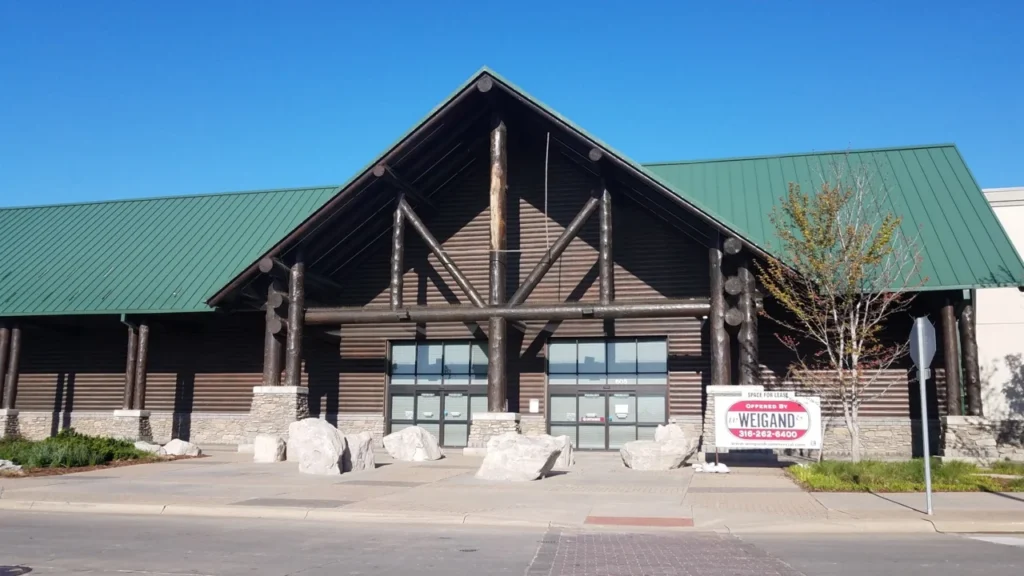
As King of Freight stands poised to buy the abandoned Gander Mountain building in the WaterWalk for office space, the proposed land lease contract with the city leaves lots of flexibility for it to one day revert to a store or other commercial use. As long as King of Freight keeps its promise to create 400 new jobs in Wichita and keeps them anywhere in the city, under the contract it could use the Gander Mountain building however it wants and still lease the city-owned land it sits on for $1 a year, City Manager Robert Layton said. The original 99-year lease to the developers of WaterWalk has about 85 years left on it. That flexibility was built into the deal because King of Freight may not want to stay there forever, Layton said. The company, a freight brokerage with nationwide reach, has been rapidly growing for several years and probably will need more space a few years from now. “If their growth continues and they may outgrow that building, we don’t know if they would keep part of their staff there or if they would move,” Layton said. The city of Wichita has put $41 million of taxpayer money into developing the WaterWalk, including $6 million that was spent on constructing the Gander Mountain building. The city was supposed to get 25 percent of the revenue, after expenses, from the WaterWalk developers subleasing property for stores, restaurants and other retail businesses. But City Hall has never gotten any money from the profit-sharing agreement because the formula used to calculate the expenses heavily favors the developer. If King of Freight did move, but kept its 400 new jobs anywhere in Wichita, the company would have the options of selling or leasing the building to another user without triggering the provision for the city to get 25 percent of the rental income. After 10 years, the rent-sharing provision would be removed from the contract entirely. Layton said it would be a better deal than the previous one, even without any theoretical potential for profit sharing. “I look at it as I get additional payroll (the King of Freight employees) which generates additional taxes for us,” Layton said. “So that’s a million dollars (over 10 years) that I don’t have right now from those 400 jobs. And I get parking revenue that I didn’t get from Gander Mountain.” The combination of the increase in taxes and the $70,000 a year for parking amounts to about $170,000 a year in increased city revenue, he said. The Gander Mountain building, which is on the banks of the Arkansas River just north of Kellogg, is owned by hotel developer Jack DeBoer. King of Freight would buy the building from DeBoer for an undisclosed purchase price. Bryant Parker, a lawyer representing King of Freight, said one of the things that attracted them to the Gander Mountain building is that it’s immediately available. “We’ve hit upon a problem where we are just out of space altogether,” he said. Parker said the company’s presence would benefit downtown even though it won’t generate direct taxes like the destination retail stores, restaurants and entertainment venues that WaterWalk originally promised. Per the contract, King of Freight is guaranteeing it would pay the 400 new employees $50,000 a year on average. Also, its workforce skews young, with an average age under 35, Parker said. “This space brings a number of things not only for our business but for downtown as well,” Parker said. “We’re talking about bringing young people with high-paying jobs to Wichita’s downtown, and that will kind of spur and catalyze all the other redevelopment efforts that are going on throughout the area.” The plan was presented to the City Council and the community at last Tuesday’s council meeting. The council decided to delay voting on it for a week to give members time to examine the agreement. It will be brought before the council again at 9 a.m Tuesday at City Hall, 455 N. Main, Wichita.
Council takes a week to consider King of Freight move to old Gander Mountain building
UPDATE, 10 a.m. Tuesday: The Wichita City Council delayed consideration of this proposal for one week on Tuesday. City Manager Robert Layton and City Attorney Jennifer Magana recommended the delay to finalize terms of the contract and King of Freight’s attorney, Bryant Parker, said he agreed with it. Original story: A fast-growing Wichita freight broker will take over the former Gander Mountain building in the WaterWalk if the City Council approves the plan on Tuesday. King of Freight has signed an agreement with WaterWalk to acquire the rights to use the former outdoor products store as its local headquarters, according to a report attached to the agenda for Tuesday’s council meeting. “KOF currently has approximately 535 employees officing in Wichita, and is in a phase of rapid expansion,” the report says. “KOF plans to redesign the Gander Mountain space, and there is also vacant space on the parcel for an additional satellite building should one be desired to accommodate more employees.” In March, Mayor Jeff Longwell hinted that a deal was in the works to bring 700 jobs to the vacant building, which backs up to the east bank of the Arkansas River just south of Waterman. At the time, WaterWalk developer Jack DeBoer said no such deal was in the works. King of Freight is a rapidly growing freight shipping brokerage with offices in two downtown buildings. Under the WaterWalk agreement, the company promises to create at least 400 new jobs with an average salary of $50,000 a year. If it meets those job goals, King of Freight won’t have to pay the city any rent on the Gander Mountain building, according to the city report. That could be a moot point. The developer and the city were supposed to share profits on rental income at the WaterWalk, but the terms of that agreement are so favorable to the developer that it has never generated any income for the city anyway. Starting with an original $30.9 million commitment of city funds in 2002, public funding of WaterWalk ultimately rose over time to about $41 million. The city money paid for land, parking structures, streets, utilities, amenities and, in the case of Gander Mountain, $6 million of construction costs to build the building. The $6 million has been paid back from sales tax income in the area, City Manager Robert Layton said Monday. Gander Mountain went bankrupt and closed the Wichita store in 2017, and the building has sat vacant since. Adding 400 King of Freight jobs to the local economy would generate about $1 million in new tax revenue over the next 10 years, according to an analysis by the Wichita State University Center for Economic Development and Business Research. King of Freight would also pay the city $70,000 a year to lease parking at the site, the city report said. Layton said his recommendation to the council will be to put that money toward paying for the new baseball stadium project under construction at the northwest corner of Maple and McLean.